
25 Wheel of Names Ideas for the Classroom
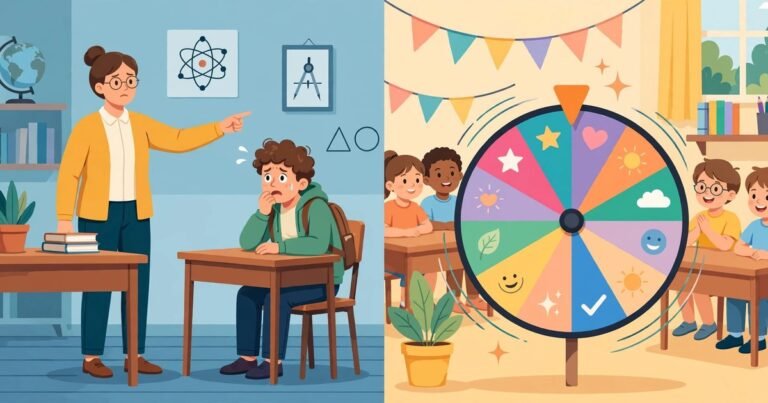
Wheel of Names ideas for the classroom work best when the wheel supports a clear learning routine rather than becoming a distraction. Teachers can use a spinner for participation, practice, transitions, grouping, review, and low-stakes choices.
Reviewed: July 30, 2026
Wheel of Names ideas for the classroom: the short answer
Useful classroom wheels answer one specific question: who participates, what students practice, which group begins, or what activity happens next. Keep separate wheels for names, content, and rewards so students understand what each spin decides.
Participation and discussion ideas
Add student initials for voluntary review turns, discussion order, think-pair-share reporters, exit-ticket sharing, or selecting a group spokesperson. Explain pass options and accommodations before spinning.
For recurring participation, Smart Fair Rotation can reduce repeated selection of the same students. It is a balancing tool, not pure independent randomness.
Curriculum review and practice ideas
Create wheels for vocabulary words, multiplication facts, spelling patterns, historical events, science concepts, literary characters, geography questions, or problem-solving strategies.
A content wheel lets every student prepare while the spinner chooses the prompt. This separates the learning target from the person selected to respond.
Classroom routines and transitions
Use a wheel for reading turns, classroom jobs, cleanup zones, line order, station rotation, presentation order, brain breaks, movement activities, or the first group to collect materials.
Routine wheels should include only appropriate options. Remove unsafe, inaccessible, or unavailable activities before the wheel is shown.
Creative and community-building activities
Spin for story starters, debate prompts, drawing subjects, peer compliments, question-of-the-day topics, team names, mystery challenges, or celebration choices.
Invite students to suggest options, then review them before adding. Student input can improve ownership without surrendering safeguarding or lesson goals.
Wheel of Names ideas for the classroom checklist
Name the learning purpose.
Confirm this step before moving to the next part of the activity.
Use minimal student identifiers.
Confirm this step before moving to the next part of the activity.
Offer an accessible alternative.
Confirm this step before moving to the next part of the activity.
Separate student and prompt wheels.
Confirm this step before moving to the next part of the activity.
Reset history at an appropriate interval.
Confirm this step before moving to the next part of the activity.
Review every visible option before projecting.
Confirm this step before moving to the next part of the activity.
Common mistakes to avoid
- Using full student records on a public screen
- Confusing equal chance with equitable participation
- Adding activities that are not accessible to everyone
- Letting novelty replace the lesson objective
Authoritative reference
Relevant external resource: NCTM Adjustable Spinner probability resource.
Wheel of Names ideas for the classroom FAQs
Can a teacher use elimination mode for turns?
Yes. Elimination creates a no-repeat order, but reset the list when the activity or class period requires a fresh round.
What should go on a review wheel?
Use short prompts, concepts, question numbers, vocabulary, or activity labels that students can read quickly.
How many classroom wheels should I create?
Use a small set with distinct purposes: student selection, content prompts, routines, and optional games.
Use the right Wheel Names tool
Start with the interactive classroom wheel and create separate lists for students, prompts, and activities.