
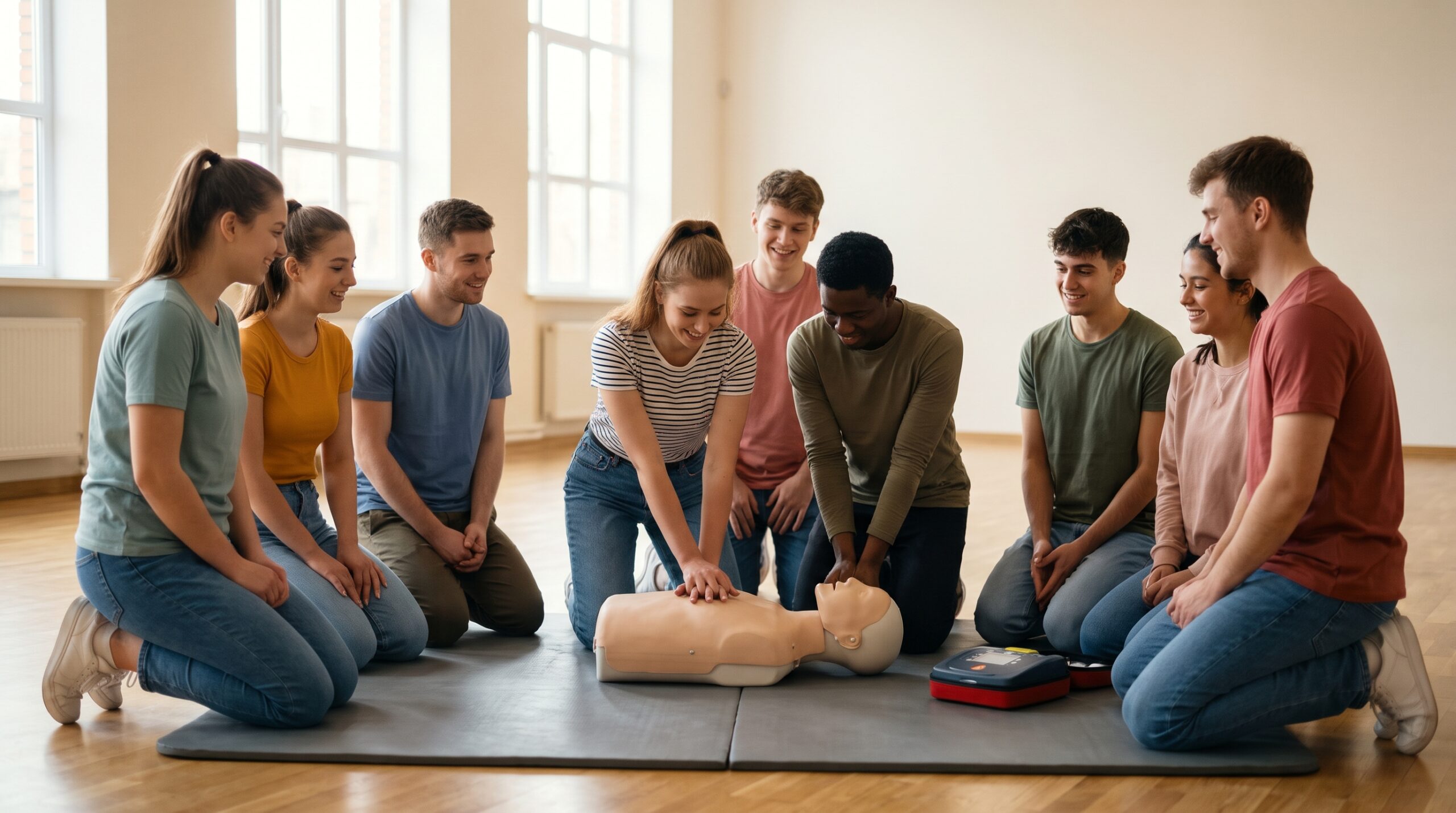
Spin the Wheel for Drills, Never for Your First Aider
A name wheel is great for picking who goes first, who presents next or who brings the snacks. Teachers, team leads and event hosts use them all the time. That’s fine for low-stakes choices. But when it comes to emergencies, luck shouldn’t decide who knows what to do. The wheel can run your practice. The skills have to come from real training, and the best CPR training Oshawa can offer your group is hands-on, current and matched to your workplace.
This guide is written for Ontario workplaces and groups. Rules in other provinces and countries differ, so check your own.
What Should a Wheel Decide, and What Shouldn’t It?
A random wheel is a good tool for fair, low-risk picks. It’s not a good tool for safety decisions.
Good uses for a wheel:
- Who leads the next team drill
- Which scenario you practise today
- Who plays which role in a practice run
- Who runs the debrief afterwards
Bad uses for a wheel:
- Who your designated first aider is
- How many certified people each shift needs
- Who skips training this year
That’s in line with the tool’s own guidance. Wheel of Names-style spinners are meant for low-risk choices, and a random pick shouldn’t replace safety checks or professional judgment. Your first aiders should be chosen by schedule and suitability, not by spin.
How Can You Use a Wheel for First Aid Drills?
Quite well, as it happens. Practice works best when it’s varied, fair and a bit fun. A spinner helps with all three.
A scenario wheel. Add scenarios as slices: a choking guest, a burn in the kitchen, a coworker who faints, an allergic reaction, a cardiac arrest, heavy bleeding. Spin to pick today’s drill. Nobody can predict it, so people stay alert.
A role wheel. Put the roles on the wheel: the person who calls 9-1-1, the person who fetches the AED, the person who starts compressions, the person who meets the ambulance at the door. Spin once per role, or use a multiple-winners mode to assign several roles in a single spin.
An elimination mode. Many spinners can remove each selected entry. Use it so everyone gets a turn before anyone repeats. That’s how you make sure the quiet people practise compressions, too.
A weighted wheel. If your team is weaker on one scenario, give it a bigger slice. Say so out loud, so the group knows why it comes up more often.
A history panel. Most wheels keep a record of results. Export it or screenshot it, and you have a simple drill log: who practised what, and when.
What Does Ontario Require From Employers?
For the actual legal minimum, no wheel is involved. Ontario’s workplace first aid requirements are set by WSIB Regulation 1101. It applies to workplaces with WSIB-covered employers. If you aren’t sure whether your business is covered, the WSIB can confirm. The Ontario Occupational Health and Safety Act (OHSA) also sets general duties for employers to protect workers.
The thresholds depend on how many workers are on a shift:
- 1 to 5 workers per shift: at least one worker with Basic First Aid
- 6 or more workers per shift: at least one worker with Intermediate First Aid
- 200 or more workers per shift: a first aid room with a qualified attendant
Certificates are valid for three years.
On June 22, 2026, the WSIB aligned its First Aid Program with the national CSA Z1210:24 standard. Emergency First Aid became Basic First Aid, and Standard First Aid became Intermediate First Aid. The thresholds did not change, and earlier certificates stay valid until they expire. Only providers the WSIB lists can deliver the new certifications.
How Do You Choose First Aiders Properly?
Choose by schedule, not by spin. Use this approach:
- Map your shifts. List every shift, including opens, closes, weekends and holidays, and count the workers on each.
- Pick people who are there. A trained person who works Tuesday mornings doesn’t help on Saturday night.
- Look for steady people. Choose people who stay calm under pressure and are likely to stay with you.
- Ask for volunteers. People who want the role tend to keep their skills fresh.
- Plan backups. Train at least one extra person per shift for sick days and holidays.
- Write it down. Keep a one-page list of first aiders by shift and post it where staff can see it.
Once the right people are trained, then bring out the wheel for drills.
What Should You Look for in a Course?
Use this checklist:
- Hands-on practice. You want time with mannequins and an AED trainer, with an instructor correcting your technique.
- The right level. Match the course to your headcount per shift, using the thresholds above.
- Provider status. Confirm the provider is on the WSIB’s list for workplace first aid.
- A flexible format. Many providers offer blended courses, with theory online and a shorter in-person session for skills.
- Certificate details. Ask how long the certificate is valid and how renewals work.
- Group options. If you have a team, ask about private sessions at your site and any minimum group size. You can ask Coast2Coast First Aid about team sessions to see what’s available.
How Can a Class or Club Use This?
The same ideas work for students, sports clubs and youth groups. Once everyone has learned the basics, a name wheel keeps practice fair.
- Review questions. Spin to pick who answers the next question about the three steps of a cardiac arrest response.
- Practice turns. Use elimination so everyone takes a turn on the mannequin before anyone goes twice.
- Team roles. Spin for who plays the caller, the AED runner and the first aider.
It keeps things moving, and people pay more attention when they don’t know who’s next.
What Does a Simple 15-Minute Drill Look Like?
Try this routine once a month:
- Set up two wheels. One for scenarios, one for roles.
- Spin for the scenario. For example, “A guest is choking and can’t speak.”
- Spin for roles. Assign the caller, the AED runner, the door person and the first aider.
- Run it for three minutes. Act it out, using a mannequin if you have one.
- Debrief for two minutes. Ask what worked and what felt confusing.
- Save the result. Export history or take a screenshot for your drill log.
- Repeat with a new scenario. Rotate monthly so the whole team practises.
Drills don’t replace a course. They keep the skills fresh between renewals.
Why Does It Matter?
Because every minute counts. According to Heart & Stroke, about 60,000 cardiac arrests happen outside hospitals in Canada every year, and only one in 10 people survives. Nearly half of them happen to people under 65.
Heart & Stroke also says that doing CPR and using an AED can double a person’s chance of survival. Every minute without CPR or defibrillation lowers the odds by about 10%. Paramedics need time to arrive, so a trained team nearby makes a real difference.
If you are looking for CPR training near Simcoe Street South and King Street, in downtown Oshawa, or surrounding areas, you may reach out to Coast2Coast First Aid & Aquatics in that area.
FAQs
Q: Can I use a random wheel to choose my workplace first aider?
A: No. A wheel is fine for drills and low-risk picks. Choose first aiders by schedule and suitability, so every shift has the coverage Ontario’s Regulation 1101 requires.
Q: How many first aiders does a small workplace need in Ontario?
A: It depends on workers per shift. For one to five, at least one worker should hold Basic First Aid. For six or more, at least one should hold Intermediate First Aid. Confirm how it applies to you with the WSIB.
Q: How long is a workplace first aid certificate valid in Ontario?
A: Three years.
Q: What changed in Ontario’s first aid program in 2026?
A: On June 22, 2026, the WSIB aligned its program with CSA Z1210:24. Emergency First Aid is now Basic First Aid, and Standard First Aid is now Intermediate First Aid. Thresholds are unchanged, and earlier certificates stay valid until they expire.
Q: Can drills replace a first aid course?
A: No. Drills keep skills fresh between renewals, but a course gives you the hands-on training and the certificate. Use both.